

COMING SOON: Improvisational Career Guidance
COMING SOON: Improvisational Career Guidance
Couldn't load pickup availability
Please note: Orders containing Improvisational Career Guidance will not be shipped until publication on the 14th of April 2027.
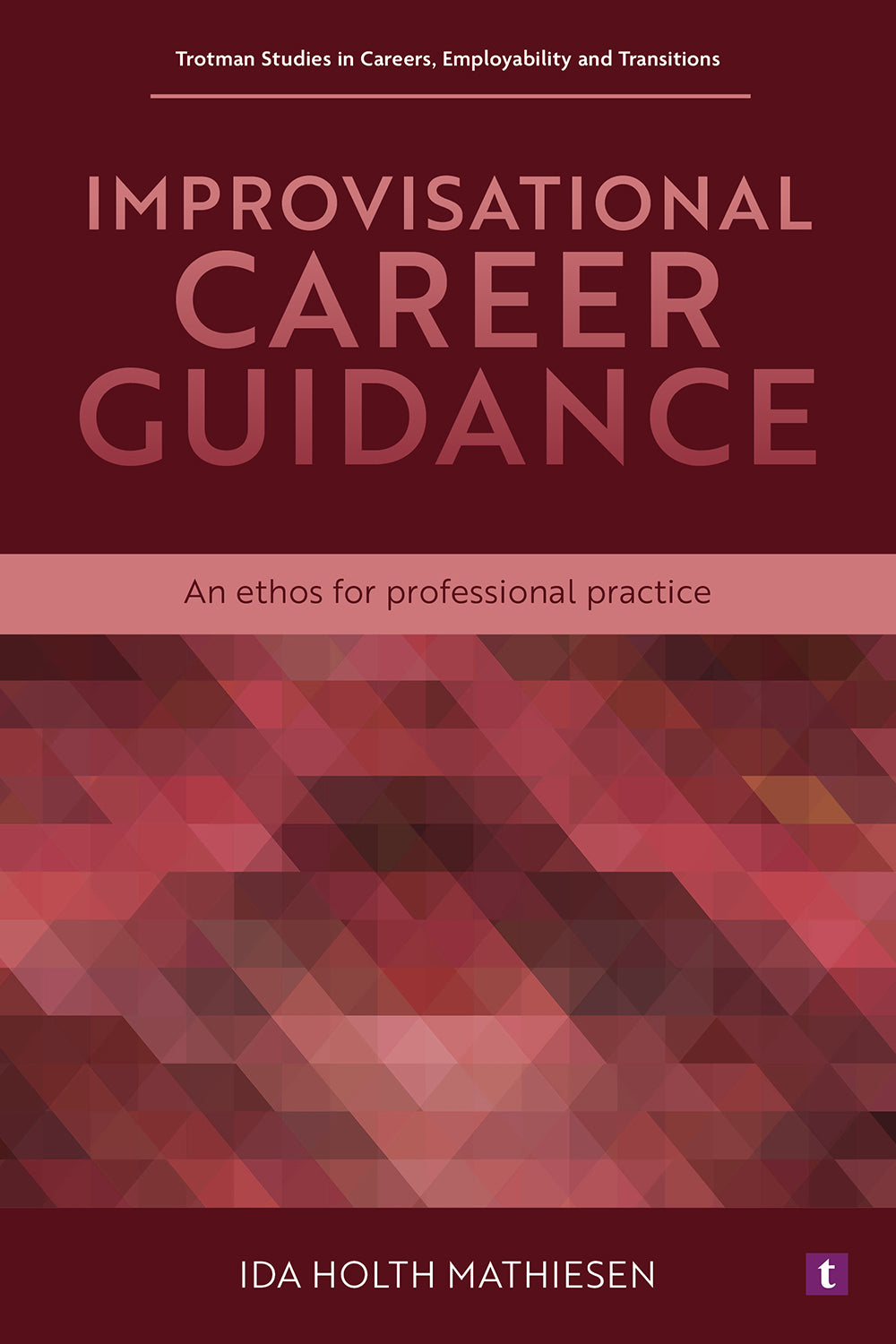
Amid shifting labour markets, evolving policy agendas and increasing accountability pressures, the professional role of the careers professional has become more complex and contested. Improvisational Careers Guidance: The art of balance, improvisation and musicality critically examines how career practitioners negotiate competing expectations and enact professionalism within diverse relational, institutional and societal contexts.
Holth Mathiesen advances a conceptualisation of professionalism that moves beyond technical competence towards a situated, interpretive and ethically reflexive practice. Drawing on theories of improvisation, it introduces the concept of improvisational-based counselling practice, which highlights the practitioner’s capacity to listen, interpret and respond to the nuances of individual encounters. This framework foregrounds relational wisdom as central to the enactment of professional judgement in complex guidance interactions.
Alongside this, the book develops the concept of mission musicality to articulate how the mission of career guidance is continuously shaped through negotiation among multiple stakeholders - policy actors, educational institutions, employers and clients. Through this lens, professionalism is understood as a dynamic process of alignment, in which career professionals balance the demands of policy with the lived realities of practice.
In this innovative volume, readers are invited to:
- Engage with a coherent theoretical framework for analysing the relational, political, and ethical dimensions of career counselling practice.
- Examine how improvisation and recognition inform responsive and context-sensitive professional action.
- Explore the role of mission musicality in mediating and harmonising diverse stakeholder expectations.
By addressing the under-theorised relational and contextual aspects of career guidance, Improvisational Careers Guidance offers a sustained contribution to the scholarship of professional practice. It provides researchers and practitioners alike with conceptual tools for understanding how professionalism is enacted, negotiated and sustained in the face of complexity and change.
Ultimately, the book argues that career guidance should be understood as an art of balance - a form of professional practice grounded in sensitivity, responsiveness and the continuous interplay between individual, institutional and societal purposes.
Collapsible content
Product info
Measurements:
Height 234 mm
Width 156 mm
Pages 192
Key Reviews
Coming soon.
Sample Chapter
Coming soon.
Free Resources
Coming soon...
Inspection Requests
Inspection Copy Request
Thinking about using one of our books for your course? You can request an inspection copy through the link below. You can read our inspection copy policy here.