
Improvisation: The X-factor of Career Guidance
By Ida Holth Mathiesen
After meetings with different professionals, I often find myself wondering what made them feel good. Was it just to get the help that they wanted, or was it also something else?
Some time ago, I was seeking help and met with a professional. After three sessions, I still felt that we were ‘walking around the porridge’ as we would say in Norway. That means that we are talking, but not about what is important or troublesome. So, my impatience was getting the better of me (I was really trying to let this professional follow her plan), and I blurted out what I thought was at the heart of the problem I was seeking help with. The answer to the question she did not ask.
Suddenly, the whole feeling in the room changed. We went from the general to the specifics, and I felt we moved from ‘your skills are lacking’ to ‘there is something real that is causing this problem’. I felt seen, heard and recognised. I no longer felt that I was the problem; I felt that it was recognised that I had been through things that were causing trouble. This change was so profound that it was a real game-changer. Two things were important to make this change happen. One, the right question needed to be asked, and two, the professional in front of me needed to be so talented that she could put aside her plans and improvise in the situation based on the new information she received.
I often come back to this: the feeling of being recognised is important, but it needs to be paired with a professional who is so secure in the role that they can go beyond the script or the plan.
Career guidance is a peculiar sort of professional enactment. People seek career guidance to find their way, or a new way, through life, learning, and work, but it is not always so that they have a concrete problem; it might also be that they have so many questions that they do not know where to start, or that they know what they want, but not how to get there. In this sense, there can be many motivations for seeking career guidance.
While I find career guidance of utmost importance, I can imagine people thinking they can manage their lives without the help of a career guidance practitioner. This puts the career guidance profession on the spot. Because people do not need career guidance in the same way they need, for example, health personnel, it is even more important for career guidance practitioners to play their role in ways that make people feel seen, heard, and helped. This is because it is so easy to dismiss the career guidance practitioner as unhelpful if the initial meeting does not live up to expectations. A student once remarked in an interview: ‘I’ll just head home and Google it instead of visiting the career guidance practitioner.’
From my research on career guidance in schools, I have seen how expectations from others beyond the guidance seeker affect how practitioners enact their roles. Policy, organisations, local and global contexts, school leaders, parents and others have specific expectations of what career guidance should help with. School dropout and young people being outside of learning and work are societal challenges that many people work toward solving, and in Norway, at least, career guidance has had explicit expectations regarding this. And if society projects expectations towards a professional group, they tend to answer. This expectation then needs to be balanced against other expectations, from individuals or from society, in what I call the balancing act of career guidance.
For success, it is essential that the guidance seeker feels well supported and that society perceives career guidance as effective at addressing challenges. In this balancing act, there appears to be an X-factor that can be actively applied during career guidance sessions. Namely, recognition and improvisation. The ability to put aside your plans and be attuned to the person in front of you, asking the right questions, so that they can leave the office feeling that they got the answers and reflections they needed.
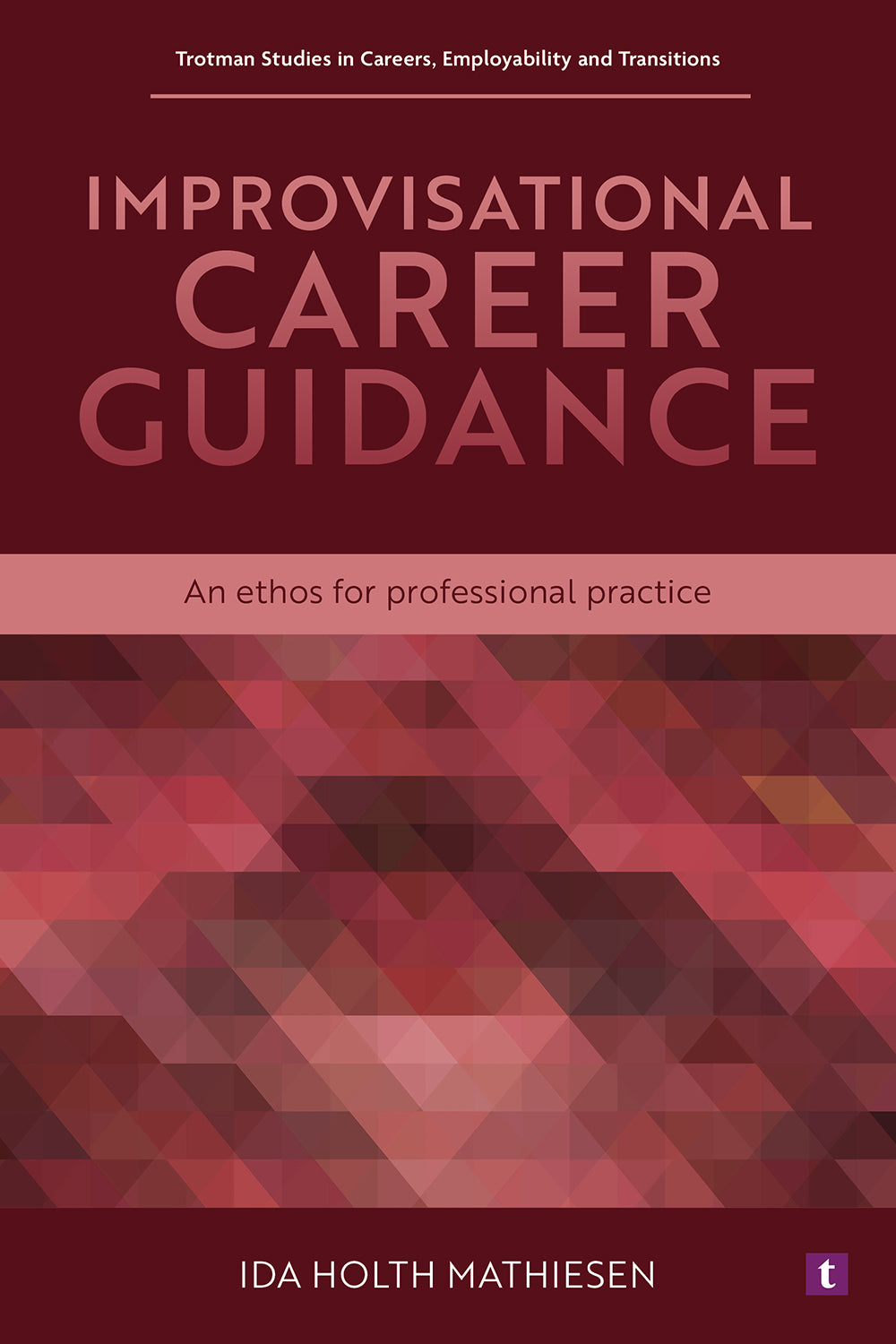
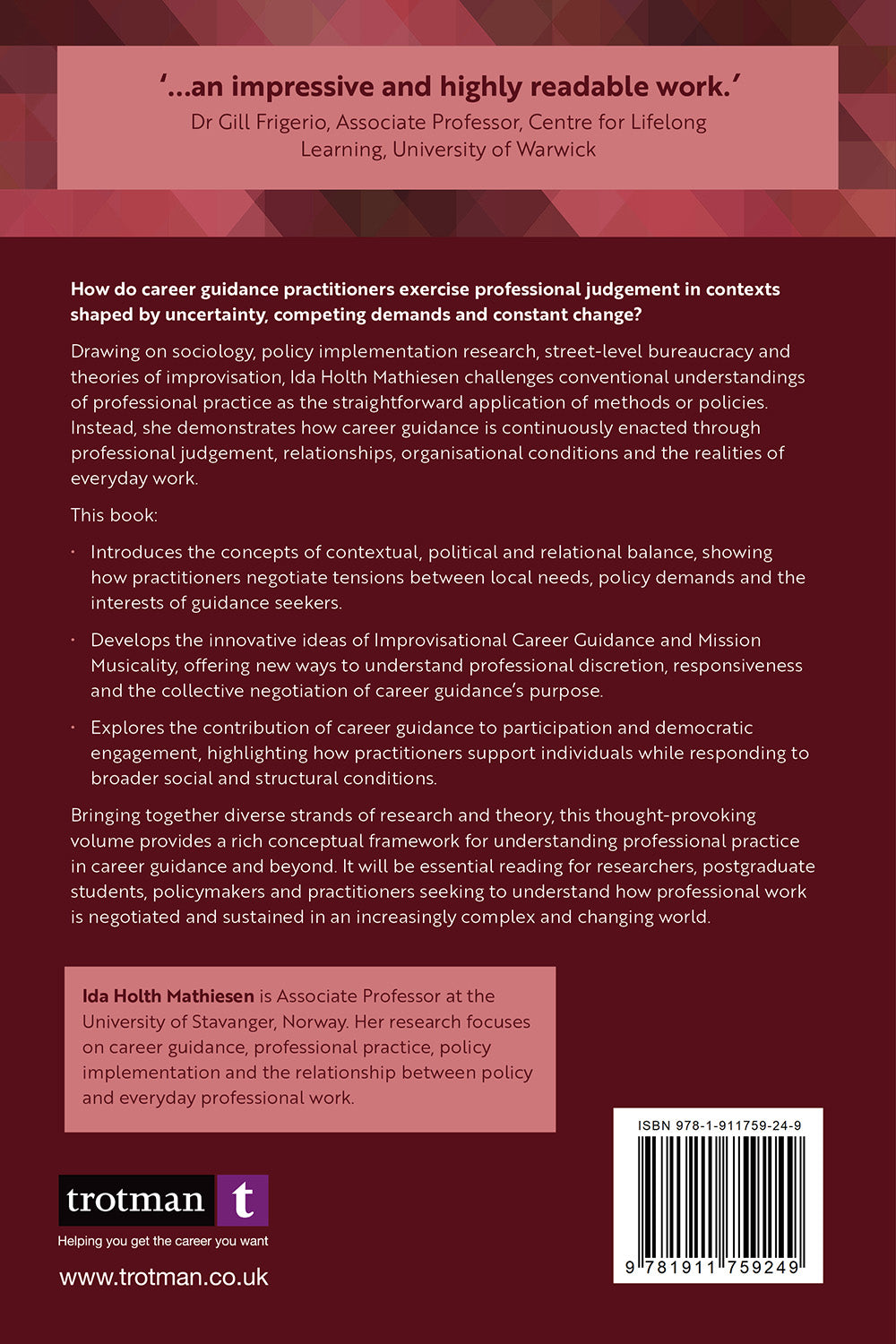
As part of the new series Trotman Studies in Careers, Employability and Transitions, my book Improvisational Career Guidance: An Ethos for Professional Practice offers a conceptual framework for understanding professional practice in career guidance and beyond. I hope the book will be of interest to researchers, postgraduate students, policymakers, and practitioners who are interested in how professional work is negotiated and sustained in an increasingly complex and changing world.