


Creating a Neuroinclusive Classroom
Creating a Neuroinclusive Classroom
SKU:9781911759317
Formats Available: Paperback | eBook
Couldn't load pickup availability
Paperback Edition
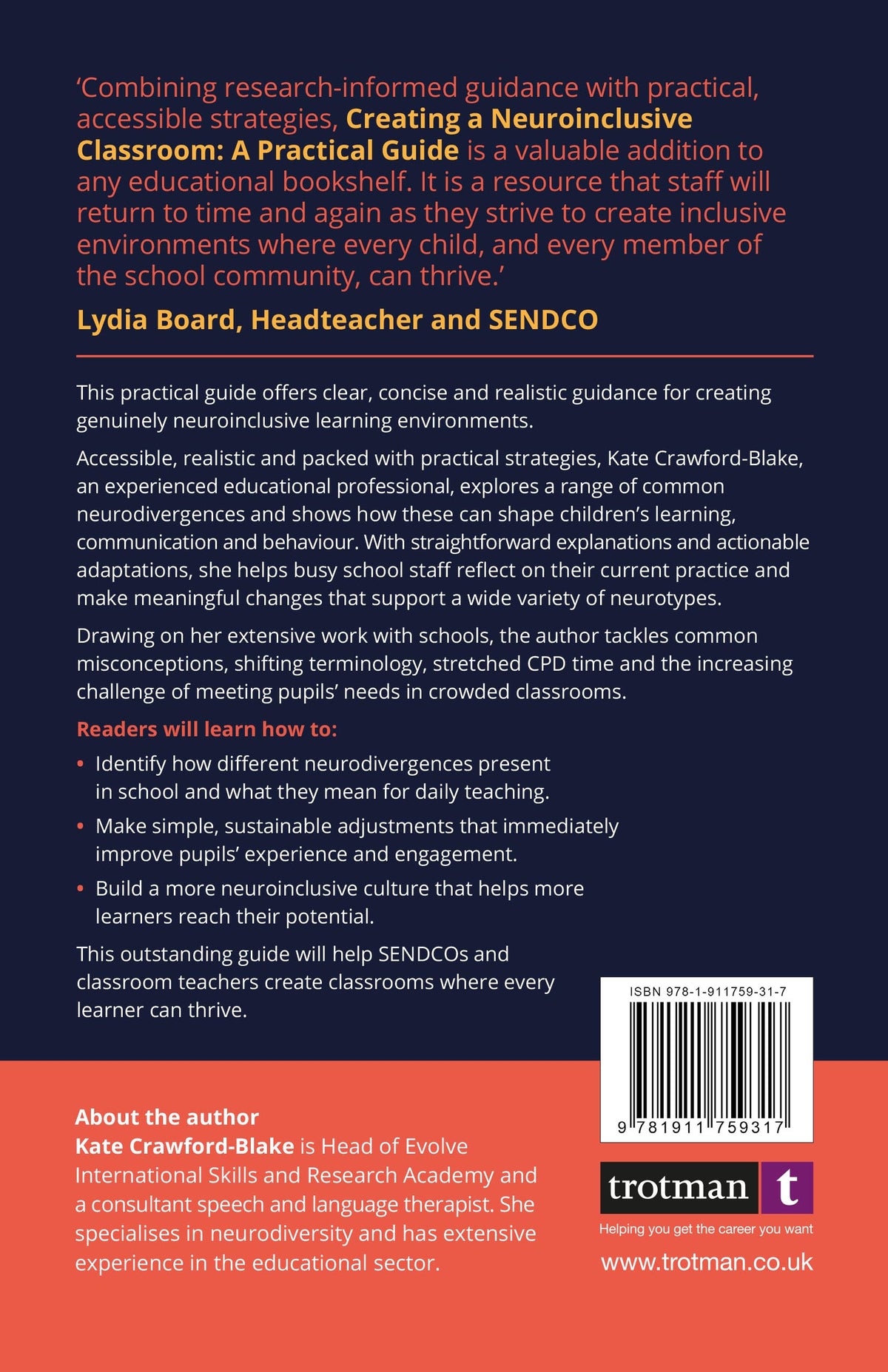
This practical guide offers clear, concise and realistic guidance for creating genuinely neuroinclusive learning environments.
Accessible, realistic and packed with practical strategies, Kate Crawford-Blake, an experienced educational professional, explores a range of common neurodivergences and shows how these can shape children’s learning, communication and behaviour. With straightforward explanations and actionable adaptations, she helps busy school staff reflect on their current practice and make meaningful changes that support a wide variety of neurotypes.
Drawing on her extensive work with schools, the author tackles common misconceptions, shifting terminology, stretched CPD time and the increasing challenge of meeting pupils’ needs in crowded classrooms.
Readers will learn how to:
- Identify how different neurodivergences present in school and what they mean for daily teaching.
- Make simple, sustainable adjustments that immediately improve pupils’ experience and engagement.
- Build a more neuroinclusive culture that helps more learners reach their potential.


Collapsible content
Product info
Published: 08 October 2026
Edition: 1st
Length: 128 pages
Dimensions: 21.6 x 140 cm
Key Reviews
'Creating a Neuroinclusive Classroom is an engaging and accessible text for both experienced teachers and those early in their professional development. The author offers a clear, research-informed exploration of neurodiversity, addressing common misconceptions while outlining current thinking around diagnosis, characteristics, needs and inclusive practice.
A particular strength of the book is its reflection on neuroinclusion from a range of perspectives and its detailed focus on sensory, practical approaches. Each element is explained with a strong rationale, helping practitioners understand not only what to do but why. Professionals are invited to reflect on their experiences and access the ideas at their own level.
The inclusion of reflection points, case studies, and first-person accounts provides authenticity. Consideration of how children, families and schools experience neurodiversity helps underpin the advice offered. The strategies throughout are practical, manageable and closely linked to key concepts such as executive function, emotional wellbeing and individual needs.
Overall, this is a highly valuable resource for those working in education. Its blend of research, practice and lived experience makes it both informative and reflective. I will be recommending this text to our undergraduate and postgraduate initial teacher education students, who will benefit greatly from its clarity, relevance and holistic neuroinclusive approach.'
Dr Sarah Trussler SFHEA, RSA , UKCGE,
Associate Professor at the School of Education, Language and Psychology at York St John University
Sample Chapter
Read the sample chapter here.
Free Resources
View the free resources here.
Inspection Requests
Inspection Copy Request
Thinking about using one of our books for your course? You can request an inspection copy through the link below. You can read our inspection copy policy here.
Table of Contents
- What is neurodiversity?
- The impact of neurodivergent differences
- Adapting your setting for sensory differences
- Adapting your setting for changes
- Adapting your setting for free time
- Adapting your setting for emotional wellbeing
- Adapting your setting for positive friendships
- Collaboration - it’s a team effort
- Conclusion
Glossary and references

Meet the Author: Kate Crawford-Blake
Kate Crawford-Blake is Head of Evolve International Skills & Research Academy and a Specialist Speech and Language Therapist. She is an experienced speech and language therapist working in schools and other settings. She is also currently doing a PhD on anxiety, autism and the intolerance of uncertainty.